
Fostering hope after a diagnosis of mental illness
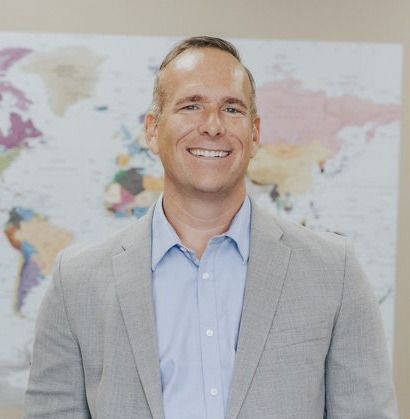

Mental Health Awareness Month was established in 1949 to shed light on the importance of mental wholeness and well-being. According to the National Alliance on Mental Illness, 43.8 million adults experience mental illness in a given year, and 1 in 5 adults in America experience a mental illness. Nearly 1 in 25 (10 million) adults in America live with a serious mental illness. Countless individuals and organizations around the U.S. are committed to supporting these individuals. Locally, one such organization is Hope Haven, and one such individual is Wade Koenen.
Although Rock Valley native Wade Koenen’s story is filled with adversity, he readily testifies to God’s faithfulness.
“The Lord has been good,” he said.
After graduating from Puritan Reformed Theological Seminary in Grand Rapids, Michigan in 2005, Koenen served as pastor of a church in Fort Macleod, Alberta, from 2005 to 2014 and, looking back, saw God’s hand with him there.
“I enjoyed seeing people brought to faith in Jesus and seeing people growing in their walk with the Lord,” he said. “I enjoyed preaching and teaching as well as providing Biblical counsel.”
In November of that year, however, Koenen returned to Rock Valley because he began exhibiting symptoms of a possible mental illness and needed the support of his family. Three different hospitalizations followed.
“It wasn’t until the third hospitalization that, with medication and counseling, I kind of woke up to my reality,” said Koenen. “I was sitting with a fellow patient at the hospital in Cherokee, and he was telling me how he could read peoples’ minds. I thought, ‘No, that can’t be right; he must be sick.’ However, that’s when I began recognizing my own symptoms and really coming to acknowledge that I had a mental illness.”
Eventually, Koenen was diagnosed with Schizoaffective disorder, a disorder that’s marked by a combination of schizophrenia symptoms, including hallucinations or delusions. In addition, Schizoaffective disorder includes mood disorder symptoms, such as depression or mania. Although getting the diagnosis was difficult, Koenen admits that it brought some measure of relief.
“I could look back at my life and conclude that some of my actions and thoughts were due to an illness and were not things I would do or say when I had a healthy mind,” he said. “I am thankful for the grace of Jesus and for second chances. My life is an example of the gospel, as God can make all things new.”
In addition to bringing clarity and the beginning of healing for Koenen, his hospitalizations ultimately gave him the hope that he could help others who found themselves experiencing a mental illness. As he was interacting with a fellow patient during one of his hospital stays, a social worker took notice and suggested he’d make a great peer support specialist for Hope Haven.
According to Hope Haven’s website, the Medicaid-funded program is “designed to support adults with mental illness in their recovery through the use of mentorship. Peer support specialists are people who are living well in their own recovery from mental illness. Peer support specialists use their lived experience to walk alongside the client, providing support, and guidance.”
Koenen decided to apply for a peer support specialist position and was hired in 2017.
“I thought my skill set and experience both as a pastor and as someone with a mental illness would be a good fit,” he said.
Hope Haven’s Peer Support Program provides services in the Iowa counties of Sioux, Lyon, Plymouth, Osceola, O’Brien, Dickinson, Clay, Emmet, and Palo Alto. Ninety-six individuals receive services through Hope Haven’s Peer Support Program and are typically already involved in the organization’s residential or intensive psychiatric rehabilitation programs. On occasion, individuals are referred to the program by hospitals or the organizations in which they receive mental health therapy.
“Really, any organization that is working with an individual and thinks they could benefit from the extra support that the peer support program provides could make a referral,” said Kimber Patterson, Hope Haven’s Director of Mental Health Services. “Some individuals are in the initial stages of managing their mental illness, while others are in the maintenance stages. I think just having that mentor who can walk alongside them and say, ‘This is difficult,’ is really important.
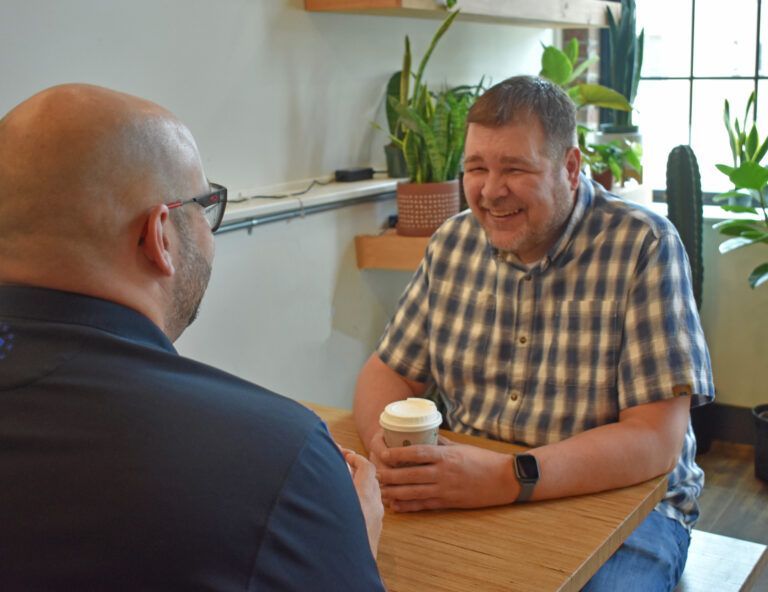
Koenen is one of eight peer support specialists who serve the Hope Haven community. Each of them participated in a week-long training with the State of Iowa. Koenen currently meets with 14 individuals who’ve been diagnosed with some form of mental illness. He meets with each individual for three hours per month.
“It has been extremely fulfilling to work as a peer support specialist for Hope Haven,” said Koenen. “I enjoy seeing the excitement in my clients’ eyes when I show up and as they share their stories from week to week. I enjoy seeing growth, being able to share my Christian faith, and being able to assist them in providing guidance and support in their challenges and challenging times.”
In addition to the Peer Support program, Hope Haven provides Intensive Psychiatric Rehabilitation (IPR) and Home-Based Habilitation (HBH) programs. IPR is designed to aid those with serious mental illnesses in acquiring or recovering meaningful roles in their community. They achieve this by working with one of two of Hope Haven’s IPR Practitioners to make positive changes in their educational, vocational, or living environments.
Currently, 20 individuals are involved in Hope Haven’s IPR program and participate in weekly group sessions that focus on building a knowledge base related to diagnoses, communication, interpersonal relationships, mindfulness, and wellness. In addition, they participate in individual sessions every week, during which they focus on their personal goals.
Hope Haven’s Home-Based Habilitation program consists of providing services for individuals with serious mental illnesses who either live in their own homes or one of the organization’s habilitation homes. Currently, 155 individuals receive services in their homes, and 38 people receive services in Hope Haven’s habilitation homes.
Whether serving as a peer support specialist, IPR practitioner, or working with individuals in the HBH program, Hope Haven’s mental health staff has a passion for assisting those living with mental illness to live successful and joyful lives.
“A lot of people experience a lot of hopelessness when they get a diagnosis of a serious mental illness,” said Patterson. “They often think that their lives will never be the same. So, to have that person walk alongside them and say, ‘No, you can still have a good life; you can have a meaningful, successful life, and recovery is possible makes all the difference.’”
Patterson encourages anyone who needs immediate support for themselves or a loved one to reach out to the 988 Suicide & Crisis Lifeline. Call or text 988 or chat at 988lifeline.org.
Yourlifeiowa.org is another place people can go to get help with alcohol, drug, gambling, mental health concerns, or suicidal thoughts.
CLICK HERE to learn more about Hope Haven Mental Health Services.
The post Fostering hope after a diagnosis of mental illness appeared first on Hope Haven .